


Who Is Liable in an Owner-Operator Truck Accident?
In an owner-operator truck accident, the owner-operator may be held liable because they own and operate the commercial truck. However, if the owner-operator works under a trucking company’s authority, the company may share liability. Additionally, maintenance contractors or other parties may be held responsible if their negligence contributed to the crash.
In such cases, determining liability can be difficult because multiple parties may blame each other for the accident. At Todd Miner Law, our lawyers conduct thorough investigations, gather critical evidence, and interview witnesses to establish truck accident liability. We then build a strong case to pursue fair compensation for your injuries and losses. Call 407-894-1480 for a free consultation with our truck accident attorneys.
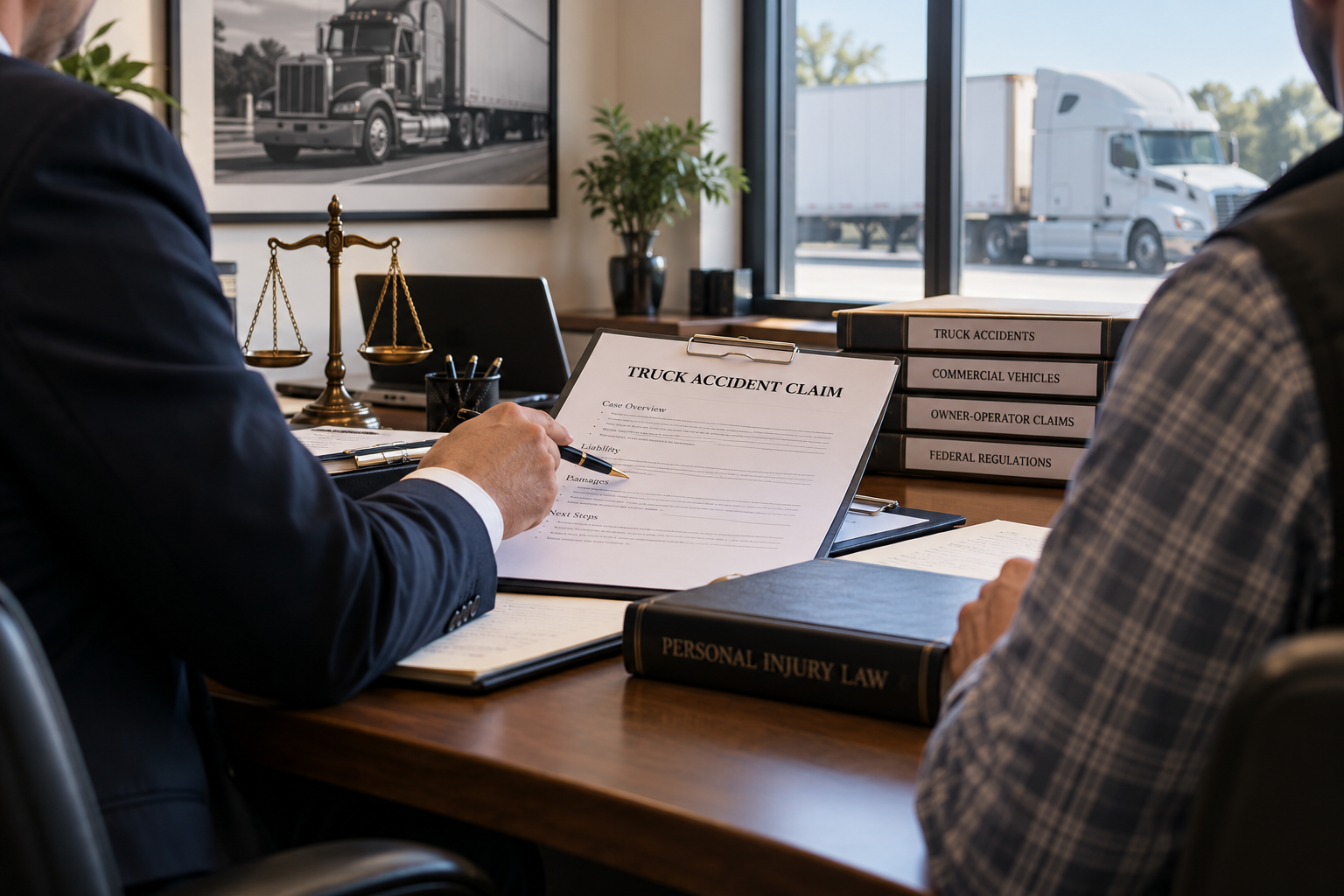
Who Can Be Held Liable in an Owner-Operator Truck Accident Case?
Several parties may be held liable in an owner-operator truck accident, including the commercial truck driver, the trucking company, and the vehicle owner. In some cases, the maintenance contractor, the cargo-loading company, and the truck manufacturer may also face a compensation claim. Determining truck accident liability requires identifying each party’s legal responsibilities and how their negligence contributed to the crash.
Here is why these liable parties can share responsibility in an owner-operator truck accident:
1. Owner-Operator Truck Driver
An owner-operator may be directly liable when their negligent driving causes a truck accident. Although they run their own trucking business, they must follow applicable traffic laws and federal safety regulations.
The following individual driver’s actions may establish their negligence:
- Distracted driving
- Speeding or reckless driving
- Unsafe lane changes
- Driving under the influence
- Driver fatigue
- Following too closely
- Failure to yield the right of way
- Hours-of-service violations
Additionally, an owner-operator working under their own motor carrier authority may be liable for failing to meet federal safety and vehicle maintenance requirements.
2. Trucking Company or Authorized Motor Carrier
A trucking company may be held liable if it allows an unqualified owner-operator to transport freight under its authority. Under 49 CFR Part 391, the carrier must verify the driver’s qualifications, including driving history and medical fitness.
For example, a carrier may discover repeated reckless driving violations but still assign freight to that owner-operator. If the driver’s unsafe conduct causes an accident, the carrier may face a negligent hiring claim.
3. Truck Owner or Equipment Leasing Company
A separate truck owner may face liability if they allow an owner-operator to use their vehicle and the driver causes an accident. Under Florida’s dangerous instrumentality doctrine, vehicle owners may share responsibility for injuries caused by someone they permit to drive.
However, Florida Statutes §324.021(9) limits owner liability in certain leasing arrangements. Additionally, the federal Graves Amendment generally protects qualifying rental and leasing companies from liability based solely on vehicle ownership. These protections may not apply if the leasing company independently caused harm through negligent maintenance or other wrongful conduct.
4. Third-Party Contractors
A third-party maintenance contractor may be held liable if improper repairs or inspections cause an owner-operator truck accident. For example, a mechanic may incorrectly install brake components or fail to identify worn steering parts. If these failures cause the driver to lose control, the contractor may face a negligence claim.
However, under 49 CFR §396.3, motor carriers must ensure that trucks under their control receive proper inspections, repairs, and maintenance. Therefore, hiring an outside contractor does not automatically eliminate the carrier’s safety responsibilities.
5. Cargo-Loading Companies
Improperly loaded freight can make a commercial tractor-trailer unstable, increasing the risk of rollovers, jackknife accidents, and loss of vehicle control. If a separate company loaded the freight, it may face liability when its mistakes contribute to an owner-operator truck accident.
For example, a warehouse loading team may exceed the trailer’s weight limit or fail to secure heavy equipment. When the cargo shifts during transport, the owner-operator may lose control and collide with other motorists.
To establish the loading company’s liability, investigators may examine weight tickets, bills of lading, loading diagrams, and cargo securement records. These documents can establish who loaded the freight and whether their mistakes contributed to the crash.
6. Truck or Parts Manufacturer
Sometimes, an owner-operator truck accident occurs because a defective vehicle component fails without warning. If faulty brakes, steering systems, tires, or other truck parts cause the crash, you may pursue a product liability claim against the manufacturer.
A manufacturer may also face liability for failing to provide adequate warnings about known product risks. In these cases, engineering reports, product recalls, and examinations of damaged components can help establish the defect and its connection to the crash.
Does a Carrier’s Control Over Deliveries Affect Liability?
Yes, a carrier’s control over deliveries can affect liability in an owner-operator truck accident. If the trucking company gives unsafe instructions or pressures the driver to violate safety regulations, it may share responsibility for the crash. However, the injured party must establish how those decisions contributed to the accident.
Here are some other situations where a carrier’s control over deliveries may establish liability:
- Unrealistic delivery deadlines: The carrier sets schedules that pressure the owner-operator to speed, skip rest breaks, or exceed federal driving limits.
- Ignoring driver fatigue: The driver reports exhaustion, but the company insists on continuing deliveries despite the safety risks.
- Unsafe route instructions: The carrier directs the driver onto a restricted or unsuitable route, contributing to a collision.
- Pressure to violate regulations: The carrier threatens to cancel assignments or reduce future work if the driver refuses an unsafe delivery.
- Ignoring vehicle safety complaints: The carrier instructs the owner-operator to continue deliveries despite knowing about dangerous mechanical problems.
- Manipulating driving records: The company pressures the driver to record driving time as off-duty hours to meet delivery schedules.
Importantly, 49 CFR §390.6 prohibits motor carriers from forcing drivers into violating applicable federal safety regulations. However, proving a regulatory violation alone does not establish liability for an accident. The evidence must connect the carrier’s conduct to the truck crash.
What If Both the Driver and Trucking Company Are at Fault?
If both the owner-operator and the trucking company contributed to the accident, both may be held liable for the resulting injuries and damages. For example, the driver may cause a crash through speeding, while the trucking company may share responsibility for negligent hiring or ignoring safety violations.
In such cases, courts generally assign each at-fault party a percentage of liability based on their negligence under Florida Statutes §768.81. For example, if the driver bears 60% responsibility and the trucking company bears 40%, each generally pays its assigned share of damages.

Can a Trucking Company Hire an Owner-Operator Without a Lease?
No, a trucking company cannot hire an owner-operator without a lease. Under 49 CFR §376.11, a trucking company must obtain a written lease before using an owner-operator’s truck under its operating authority. However, an owner-operator with independent operating authority can transport freight for another company without leasing their truck to that company.
When a trucking company leases an owner-operator’s truck, 49 CFR §376.12 requires the agreement to establish:
- Lease duration: The agreement must specify when the carrier takes possession of the truck and when the lease ends.
- Operational responsibility: The carrier must assume responsibility for operating the truck throughout the lease period.
- Insurance coverage: The agreement must identify the carrier’s public liability coverage and specify responsibility for other insurance.
- Payment terms: The lease must explain how the carrier pays the owner-operator and identify applicable deductions.
- Vehicle identification: The carrier must properly identify the truck and maintain the required lease documentation.
However, federal regulations allow some exceptions, such as when a trucking company rents a truck without hiring its driver. Additionally, different leasing rules apply when two authorized trucking companies share equipment.
Does Insurance Differ for Independent and Leased Drivers?
Yes, insurance requirements differ depending on whether an owner-operator works independently or leases their truck to a trucking company. Independent owner-operators generally arrange their own commercial liability insurance. However, when they operate under another carrier’s authority, that carrier must maintain the required liability coverage to protect injury victims.
Florida law also sets minimum insurance requirements for commercial trucks. Under Florida Statutes §627.7415, coverage depends on the truck’s weight and applicable federal regulations.
The minimum combined bodily injury and property damage liability coverage includes:
| Vehicle Weight / Type | Minimum Combined Liability Coverage |
|---|---|
| Commercial vehicles weighing 26,000 to less than 35,000 pounds | $50,000 |
| Commercial vehicles weighing 35,000 to less than 44,000 pounds | $100,000 |
| Commercial vehicles weighing 44,000 pounds or more | $300,000 |
| Commercial trucks subject to federal minimum insurance requirements | $750,000 or more, with higher limits for certain hazardous materials |
Is an Owner-Operator Different From a Company Driver?
Yes, an owner-operator is different from a company driver. An owner-operator owns or leases their truck and runs an independent trucking business. In contrast, a company driver works as an employee and typically operates a truck provided by their employer.
The distinction also affects liability after a truck accident. Under vicarious liability, a trucking company may be held responsible when its employee causes an accident while performing job duties.
However, owner-operators generally work as independent contractors, so the same employer liability rules may not automatically apply. Still, a trucking company may face liability for an owner-operator driver’s negligence, depending on the lease, its responsibilities, and applicable law.
How Does Todd Miner Law Identify Responsible Parties?
At Todd Miner Law, our lawyers investigate the owner-operator’s working arrangement to determine who was legally responsible for the truck at the time of the accident. We verify USDOT registration and operating authority through FMCSA records to establish whether the driver operated independently or under another carrier.
Additionally, our investigation focuses on:
- Reviewing business relationships: We examine contracts to identify the owner-operator’s relationship with the carrier and each company’s legal obligations.
- Verifying lease validity: We confirm the lease start and end dates to determine whether the carrier was responsible for the truck at the time of the accident.
- Tracing equipment ownership: Our lawyers check vehicle titles and registration records to identify individual owners or equipment leasing companies that may be held liable.
- Assessing regulatory compliance: We identify which party had responsibility for driver qualifications, truck inspections, and federal safety compliance.
- Establishing negligence: Our attorneys connect each party’s specific legal duties and failures to the circumstances that caused your injuries.
Once we identify the liable parties, we determine the legal grounds for pursuing claims against each one. We then file claims against the responsible parties and pursue a lawsuit if settlement negotiations fail to secure fair compensation. Call 407-894-1480 for a free consultation to discuss your legal options.
Which Federal Trucking Regulations Apply to Owner-Operators?
Owner-operators must follow the Federal Motor Carrier Safety Regulations (FMCSRs), primarily under Title 49 of the Code of Federal Regulations (49 CFR Parts 390–399). These rules cover driver qualifications, working hours, vehicle maintenance, and road safety. However, additional requirements depend on whether they operate under their own authority or lease their truck to another motor carrier.
The following table explains how these requirements differ:
| Factor | Operating Under Their Own Authority | Leased to Another Motor Carrier |
|---|---|---|
| Registration | Must obtain a USDOT number and any required interstate operating authority (MC number). | Generally operates under the leasing carrier’s USDOT number and operating authority. |
| Insurance | Must maintain required commercial liability coverage, typically at least $750,000 for heavy trucks carrying nonhazardous freight. | The authorized carrier must maintain required public liability coverage during its operations. |
| Drug and Alcohol Testing | A covered CDL owner-operator must designate a third-party administrator and arrange required testing and annual Clearinghouse queries. | The leasing carrier handles employer compliance obligations, including applicable testing and Clearinghouse queries. |
| Vehicle Maintenance | Must arrange regular inspections, necessary repairs, and maintenance records. | The carrier must ensure vehicle safety. However, the lease may assign inspection and repair work to the owner-operator. |
| Lease Agreements | No carrier lease is necessary when operating independently. | Must comply with applicable federal leasing regulations under 49 CFR Part 376. |
What If Multiple Victims File Claims Against the Driver?
If multiple victims file claims against an owner-operator truck driver, they may have to share the available insurance coverage. However, the coverage may not be enough to compensate everyone for their injuries and losses. In such cases, the insurance companies use the following legal methods to divide the available money among victims:
- Court proceedings: The insurer may ask a court to distribute the insurance funds based on each victim’s damages and other relevant factors.
- Binding arbitration: The insurer and victims may agree to let an arbitrator determine each person’s share based on their losses and comparative fault.
If the available insurance coverage cannot fully cover your losses, you may pursue financial compensation from other parties who contributed to the accident. This may include the trucking company, maintenance contractor, or truck manufacturer, depending on the circumstances of the crash.
Can a Carrier Deny Responsibility for a Contracted Driver?
Yes, a carrier may deny responsibility for a contracted driver. To justify this, the company may argue that the owner-operator was hauling freight under another carrier’s authority. Additionally, it may claim that the driver was making a personal trip or operating outside the terms of their agreement.
Here are other tactics trucking companies may use to deny liability:
- Independent contractor defense: The carrier may argue that the owner-operator operates an independent business and controls their own driving decisions.
- Expired lease agreement: It may claim that its contract with the owner-operator ended before the truck accident occurred.
- Unauthorized truck use: The carrier may argue that the driver operated the commercial vehicle without permission or violated restrictions in the lease.
- Third-party negligence: The company may blame another motorist, maintenance contractor, or cargo-loading company for causing the accident.
- Disputed maintenance responsibility: It may claim that the owner-operator alone had responsibility for inspecting, repairing, and maintaining the truck.
If a trucking company denies responsibility for an owner-operator accident, our Florida truck accident lawyers at Todd Miner Law can help. We gather lease agreements, dispatch records, delivery logs, and other key evidence to establish the carrier’s liability. Additionally, we investigate the carrier’s control over the driver to challenge attempts to avoid responsibility.
Contact Our Lawyers to Establish Liability After an Owner-Operator Truck Accident!
Owner-operator trucking arrangements can complicate liability determination. In such cases, the driver owns the truck but may operate under another company’s authority. As a result, both parties may dispute responsibility, delaying your compensation claim. Meanwhile, you may already face mounting medical expenses, lost wages, and ongoing treatment costs while recovering from your injuries.
At Todd Miner Law, we have 30+ years of experience handling personal injury cases, including truck accident claims, across Florida. Our lawyers investigate the accident, gather evidence, and negotiate with insurance companies to pursue fair compensation. We also handle communications with all involved parties and represent you in court when necessary, allowing you to focus on your recovery.
In addition, you pay no attorney fees unless we recover compensation for you. Call 407-894-1480 or visit our Orlando office at 915 Outer Rd, Orlando, FL 32814, to schedule your free consultation.
FAQs
What If the Carrier Refuses to Release Trucking Records?
If the carrier refuses to release trucking records, our lawyers can use formal discovery to obtain the evidence needed to establish liability. Additionally, we can file a motion to compel if the carrier fails to cooperate. If the carrier violates a court order, we may seek legal sanctions for withholding evidence.
Which Insurance Must an Owner-Operator Truck Driver Carry?
Owner-operators generally need commercial liability insurance to cover injuries and property damage they cause in truck accidents. Federal Motor Carrier Safety Regulations typically require at least $750,000 in this coverage for interstate trucks carrying nonhazardous freight. However, when an owner-operator works under a trucking company’s authority, the company generally provides the required liability coverage.
How Do Mechanical Failures Affect Liability in a Truck Accident Claim?
Mechanical failures can shift liability from the owner-operator to other parties responsible for the truck’s condition. If the owner-operator neglected necessary repairs, they may be held accountable. However, if a maintenance company performed faulty repairs or a manufacturer supplied defective parts, those parties may also share responsibility for the crash.
What Happens When an Owner-Operator Works for Multiple Companies?
When an owner-operator works for multiple carriers, liability depends on which carrier controlled the truck’s operations at the time of the accident. However, disputes may arise when they deny responsibility or question the driver’s employment status. In such cases, our lawyers review contracts, dispatch instructions, and trip records to determine each party’s responsibility.
Can an Owner-Operator Be Both a Driver and a Motor Carrier?
Yes, an owner-operator can act as both a truck driver and a motor carrier if they operate under their own trucking authority. In such cases, they handle transportation services, vehicle maintenance, and compliance with federal safety regulations. Therefore, they may share liability for both negligent driving and failures to meet carrier obligations.
