
Who’s the Best Medical Malpractice Attorney in Orlando?
The best medical malpractice attorney in Orlando should have a strong record of handling complex negligence claims and proving how medical errors caused harm. Choose a lawyer with qualified medical experts, trial experience, local court knowledge, clear communication, and the financial resources to challenge hospitals, doctors, and insurance companies.
For Orlando patients seeking legal representation for medical malpractice claims, Todd Miner brings more than 30 years of legal experience and former insurance defense knowledge. He handles claims involving delayed diagnoses, surgical errors, medication mistakes, and hospital negligence. His AV Preeminent rating reflects strong legal ability and professional ethics. Call 407-894-1480 for a free consultation today about your medical malpractice lawsuit.

How Do You Find the Best Malpractice Attorney in Orlando?
To find the best malpractice attorney in Orlando, compare each lawyer’s experience, medical knowledge, case results, and communication style. Choose an attorney who regularly handles complex malpractice claims and understands Florida’s presuit requirements. Your lawyer should also know how insurers dispute negligence, causation, injuries, and damages.
Here’s how you can find a medical malpractice attorney in Orlando:
1. Review Relevant Malpractice Experience
Choose a lawyer who has handled claims involving doctors, hospitals, nurses, and other healthcare providers. Ask whether the attorney has worked on cases involving delayed diagnoses, surgical errors, wrong medication, or negligent follow-up care. Experience with similar claims helps the lawyer recognize important medical and legal issues.
2. Examine the Firm’s Case Resources
Medical malpractice claims often require expensive record reviews, expert opinions, depositions, and litigation. Confirm that the firm has the staff and financial resources to investigate your case properly. Limited resources may affect how thoroughly the lawyer can prepare your claim.
3. Verify Professional Credentials
Review the attorney’s license, disciplinary history, professional ratings, and relevant recognition. Credentials should come from identifiable and reliable sources. They can help you assess legal ability and professional conduct, but they should not replace a review of the lawyer’s actual malpractice experience.
4. Assess Settlement and Trial Preparation
Choose an attorney who prepares the claim for both settlement and possible trial. Strong preparation may improve negotiations when providers or insurers dispute negligence, causation, or damages. Ask about the lawyer’s experience with depositions, medical experts, mediation, and courtroom proceedings.
5. Review Fees and Written Terms
Ask the lawyer to explain the contingency fee, case expenses, and payment responsibilities in writing. Confirm whether costs are deducted before or after the attorney’s fee. You should also know whether you may owe expenses if the firm does not recover compensation.
When Should You Hire a Medical Malpractice Lawyer in FL?
You should hire a medical malpractice lawyer in Florida as soon as negligent care causes unexpected harm. Early legal help gives your attorney more time to review records, consult medical experts, preserve evidence, and meet strict filing deadlines. It also helps you understand whether the medical provider’s mistake caused additional injury and whether you may recover compensation.
Here are several other situations when you should seek legal help:
- Your condition worsens after surgery, medication, or a delayed diagnosis.
- A doctor, nurse, pharmacist, or anesthesiologist made a serious treatment error.
- A medical facility refuses to release complete records or explain your treatment.
- An insurance company requests statements or pressures you to accept quick payment.
- Negligent care causes permanent illness, disability, or your loved one’s death.
What Experience Should a Medical Malpractice Lawyer Have?
An Orlando medical malpractice lawyer should have direct experience handling claims similar to yours. For example, a delayed-diagnosis case may require different medical experts and evidence than a surgical-error or birth-injury claim. Relevant experience helps the lawyer identify responsible parties, missing records, causation disputes, and likely defenses.
The attorney should also understand Florida’s pre-suit investigation requirements under Florida Statute §766.203. Additionally, your lawyer should know how to review medical records, prove causation, calculate damages, conduct depositions, and prepare the case for trial.
Which Questions Should You Ask Before Hiring a Lawyer?
You should ask how the lawyer will evaluate, prepare, and manage your medical malpractice claim. Also, discuss case costs, expert reviews, communication, deadlines, and possible challenges before signing an agreement. Clear answers help you judge the lawyer’s honesty, strategy, resources, and ability to handle your case effectively.
Here are several additional questions you should ask during your free consultation:
- Who will handle my case and provide updates throughout the legal process?
- Which medical professionals will review my records and support the required evidence?
- What challenges could weaken my claim or reduce the compensation I may recover?
- How will you prove that the provider’s failure caused my serious injury?
- What costs could arise, and when would I need to pay them?
- Have you handled similar claims through settlement, depositions, and trial?
Getting clear answers to these questions will help you make an informed decision and ensure you choose a lawyer with the expertise required to manage your case effectively. If you are ready to proceed, schedule a free consultation with Todd Miner Law to discuss your case.
Why Does Local Orlando Court Experience Matter?
Local Orlando court experience helps your lawyer manage your claim correctly and avoid unnecessary delays. It also reduces filing errors, missed deadlines, and other procedural problems.
For example, the Ninth Judicial Circuit uses specific civil case management and courtroom procedures. Therefore, your lawyer can file motions, request hearings, and meet deadlines through proper channels. Your lawyer can also prepare for conferences, trial dates, and other required court steps. This preparation helps prevent mistakes and allows your medical negligence claim to progress efficiently.
What Are the Red Flags When Choosing a Malpractice Lawyer?
You should avoid lawyers who guarantee results, hide costs, pressure you to sign, or dismiss your concerns. These warning signs may show weak preparation, poor communication, or unrealistic promises. During your consultation, carefully review how the lawyer explains fees, evidence, deadlines, possible risks, and the strategy for handling your medical malpractice claim. Moreover, you should watch carefully for these warning signs during your first consultation:
- Slow responses before signing often predict poor communication during your claim.
- Pressure to sign quickly can prevent careful review of important agreement terms.
- Past verdicts mean little when nobody explains your specific case risks.
- Missing plans for experts and evidence may signal weak case preparation.
- Dismissive behavior toward your injuries can show limited concern for your recovery.
How Much Does an Orlando Medical Malpractice Lawyer Cost?
In Florida, most medical malpractice lawyers work on a contingency fee basis. This means you usually pay no attorney’s fee unless your lawyer recovers compensation for you. The lawyer then receives an agreed percentage of your settlement or verdict.
Florida limits certain contingency fees unless you sign a valid waiver. Without a waiver, your lawyer may generally receive thirty percent of the first $250,000. The lawyer may also receive ten percent of any recovery above $250,000 under Article I, Section 26 of the Florida Constitution. However, these limits apply to attorneys’ fees, not separate case expenses.
Those expenses may cover medical records, filing fees, depositions, and expert witness services. That’s why you should ask whether the firm deducts these costs before or after calculating its fee. You should also confirm whether you owe expenses if your case fails. Clear written terms help you understand your costs and protect your final recovery.
Can You Switch Medical Malpractice Attorneys Mid-Case?
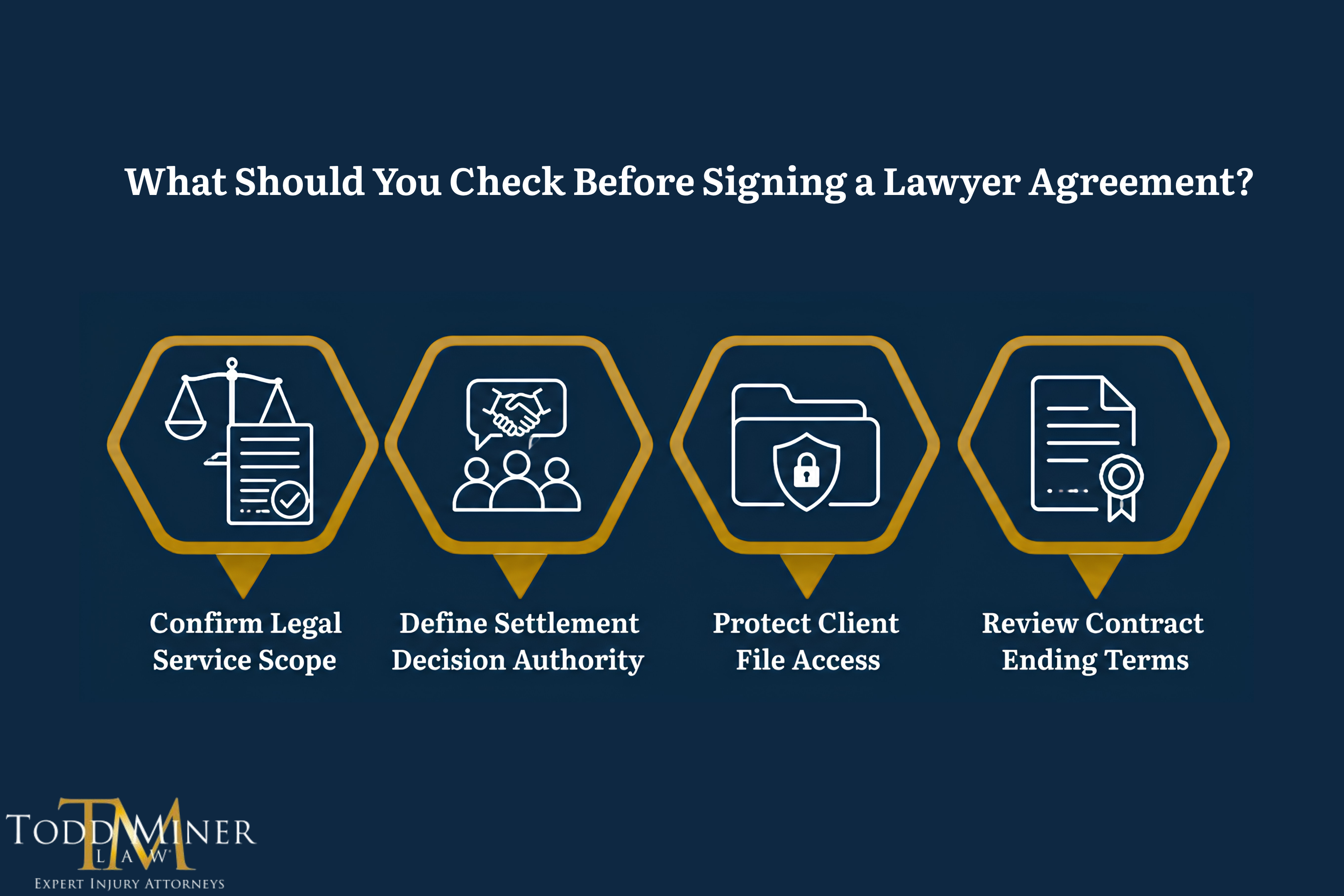
Yes, you can switch medical malpractice attorneys at any stage of your case. However, careful planning protects deadlines, evidence, fees, and ongoing case progress. You may consider changing lawyers when these problems continue despite direct discussion:
- Communication remains poor, and you rarely receive clear updates about important developments.
- Your attorney repeatedly delays agreed-upon tasks or necessary case preparation.
- You no longer trust the legal strategy guiding your medical malpractice claim.
- Limited resources prevent proper handling of experts, records, or complex litigation.
- A conflict of interest prevents your attorney from protecting your best interests.
- Dismissive responses have damaged trust and weakened your working relationship.
Once you decide to switch, review your contract and discuss the change with your new attorney. Then, request your complete case file, medical records, evidence, and itemized expense statement. Your new lawyer can review these materials, identify upcoming deadlines, and continue the claim without unnecessary delays.
In some cases, your former lawyer may seek payment for earned fees or advanced costs. Therefore, both attorneys should explain how they will divide fees and resolve any lien. Usually, switching lawyers does not require you to pay two full contingency fees.
If you filed a lawsuit, the court may require a formal substitution of counsel. Meanwhile, your new attorney should review every deadline before accepting your case. Prompt action helps protect your claim and prevents avoidable delays during the transition.
Why Do Lawyers Turn Down Medical Malpractice Cases?
Lawyers often decline medical malpractice cases because these claims are expensive to pursue. Most firms work on contingency and advance the case costs themselves. Therefore, they must confirm that the potential recovery justifies the financial risk.
Here are some other reasons an Orlando medical malpractice attorney may decline your claim:
- Your losses appear too limited to support costly experts and complex court work.
- A known treatment risk explains the result better than medical negligence.
- Florida’s filing deadline leaves too little time for the required pre-suit process.
- The firm lacks current resources to fund and manage your complex lawsuit.
Before filing a lawsuit, a Florida lawyer must investigate the claim and obtain support from a qualified medical expert. Therefore, the lawyer may decline a case when the records do not show clear negligence or causation. However, one rejection does not always mean your claim lacks value. Another attorney may assess the evidence differently, so seek another review before the deadline expires.
What Happens After You Hire a Florida Medical Malpractice Attorney?
After you hire our medical malpractice attorney, we begin investigating your claim immediately. First, we collect medical bills, records, scans, and treatment notes. Then, we create a clear timeline and identify every provider involved in your care. This early review helps us preserve evidence and protect important filing deadlines.
Once we organize the evidence, we arrange for a qualified medical expert to review your treatment. The expert determines whether a provider failed to meet accepted medical standards. Next, the expert evaluates whether that failure caused additional harm or financial losses. We use these findings to evaluate your claim and develop an appropriate legal strategy.
If the expert supports your claim, we begin Florida’s required pre-suit process under §766.106 and send formal notice to each prospective defendant. During the screening period, providers and insurers investigate the allegations and prepare their responses. Meanwhile, we may begin settlement discussions based on the available evidence.
After the screening period, we explain every available option to you. Depending on the response, we may pursue settlement, arbitration, or a formal lawsuit. Throughout the process, we manage deadlines, handle communications, and keep you informed about important decisions.
How Does the Lawyer Determine Whether You Have a Case?
Your lawyer determines whether you have a medical malpractice case by reviewing four legal elements: duty, breach, causation, and damages. Together, these four elements show whether medical negligence caused harm and created measurable losses. Here is how a medical malpractice attorney proves each element:
1. Duty of Care
First, your lawyer confirms that a provider agreed to diagnose or treat you. This relationship creates a duty to provide care that meets accepted medical standards. Once duty exists, your lawyer examines whether the provider failed to meet that standard.
2. Breach of Duty
Next, your lawyer compares your treatment with the care a competent provider should provide. Medical records and expert opinions may reveal an unsafe action, delay, or missed diagnosis. However, a poor result alone does not prove a breach. Therefore, your lawyer needs evidence showing what the provider should have done differently.
3. Causation
After finding a possible breach, your lawyer connects it directly to your added harm. They compare your health before treatment with your condition after the medical error. This comparison separates new injuries from your original illness or existing condition. Without this connection, negligence may not support a successful malpractice claim.
4. Measurable Damages
Finally, your lawyer assesses the losses resulting from your additional harm. They review medical bills, lost wages, pain, disability, and future care needs. Clear losses show whether pursuing compensation is legally and financially practical. If strong evidence supports all four elements, your lawyer may recommend moving forward with your claim.
Book a Free Consultation With Our Experienced Medical Malpractice Lawyer in Orlando!
If medical negligence harmed you, you may face pain, rising bills, lost income, and uncertainty about what happened. You may also struggle to obtain records or handle insurance pressure. In these situations, you need an experienced lawyer who can investigate your care, consult qualified experts, and protect your right to pursue compensation.
Our team at Todd Miner Law has more than three decades of legal experience handling serious medical malpractice claims. We know how to review complex records, work with experts, and challenge insurers effectively. Moreover, we pursue fair compensation for your medical bills, lost wages, and suffering. Visit 915 Outer Rd, Orlando, FL, or call 407-894-1480 for a free consultation.
FAQs
Should I Hire a National Firm or a Local Orlando Attorney?
You should usually choose the attorney with stronger malpractice experience and resources. A local Orlando lawyer understands Florida presuit rules, nearby courts, regional providers, and local experts. However, a national firm may work well when it has proven experience and qualified Florida counsel handling your case.
Can I Get My Medical Records Myself Before Hiring a Lawyer?
Yes, you can request your medical and billing records before hiring a lawyer. HIPAA generally lets you access records that covered providers maintain. Therefore, request complete charts, imaging, test results, medication records, and bills. Keep every file unchanged so your lawyer can review an accurate record.
What If the Doctor Already Apologized or Admitted the Mistake?
An apology alone does not prove medical malpractice. Florida generally excludes statements expressing sympathy from evidence. However, a separate statement accepting fault may be admissible. Therefore, record the exact words, date, location, and witnesses. Preserve related messages, but speak with a lawyer before recording private conversations.
Can I File a Malpractice Claim Without Hiring a Lawyer?
Yes, you may represent yourself, but medical malpractice cases require strict legal and medical steps. Florida requires a pre-suit investigation, expert support, formal notice, and deadline compliance before filing. Missing one requirement can weaken or end your claim. Therefore, legal guidance usually helps protect your case.
What Is the Medical Malpractice Statute of Limitations?
Florida gives you two years to file a medical malpractice claim. The deadline starts when the malpractice occurred or when you discovered, or reasonably should have discovered, the injury. However, a four-year statute of repose usually applies. Limited exceptions may extend the deadline, so prompt legal review helps protect your claim.
Is Board Certification a Must for a Medical Malpractice Attorney?
No, a Florida medical malpractice attorney does not need board certification. The attorney must hold a law degree and remain licensed to practice. However, Civil Trial Law certification can demonstrate advanced trial experience, peer review, continuing education, and examination success. Medical malpractice is not a separate Florida Bar certification.
